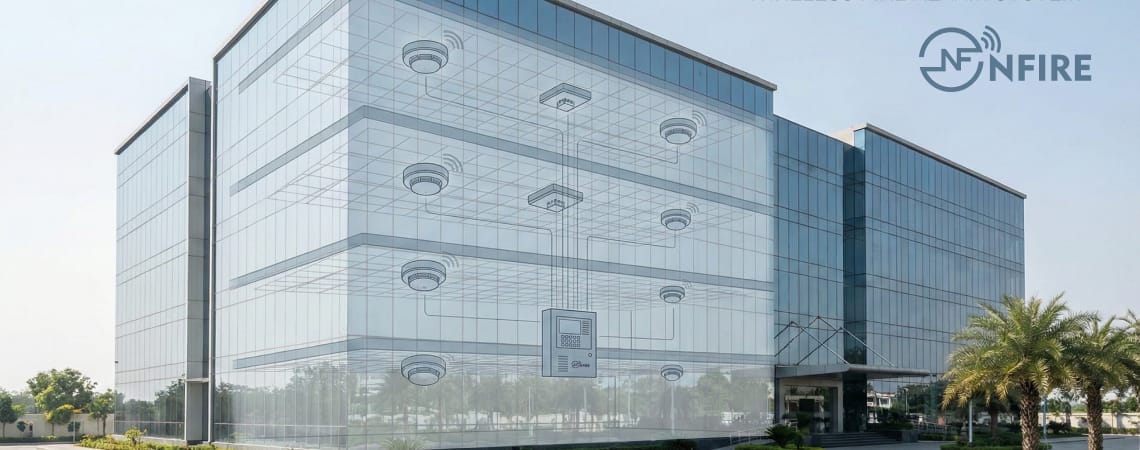

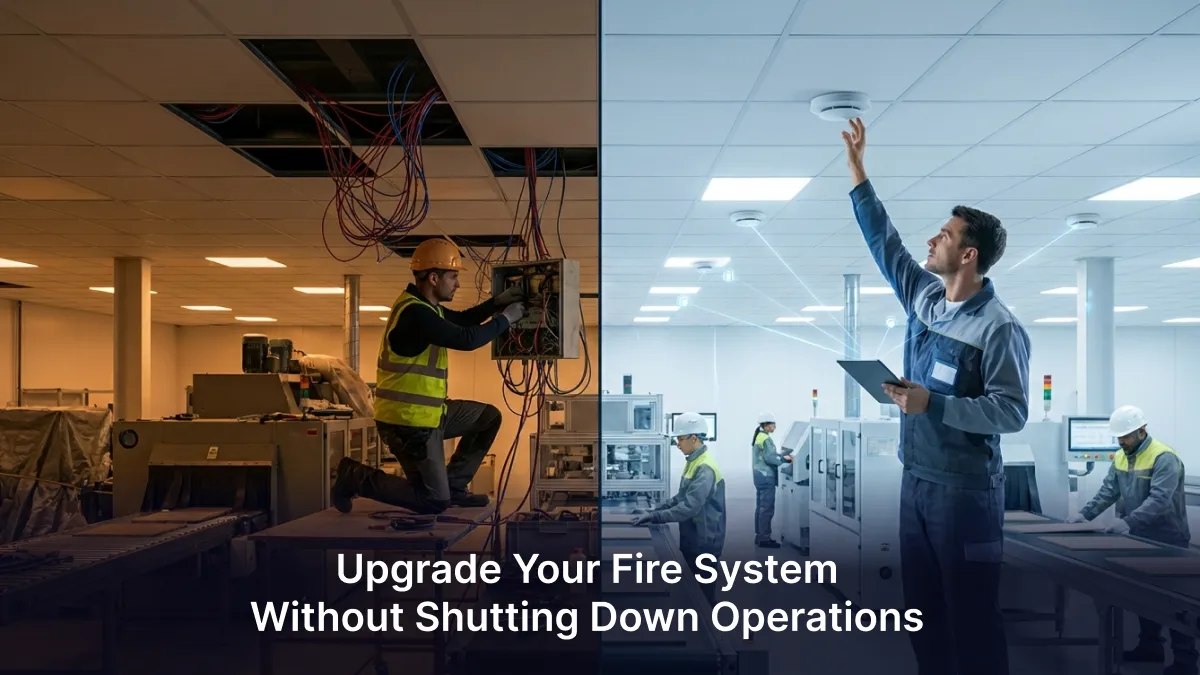
Upgrading a fire alarm system is often seen as a major disruption. For hospitals, factories, hotels, or data centers, even a few hours of downtime can mean halted operations, lost revenue, and safety risks for occupants. Many organizations assume that an upgrade requires shutting down the facility—but that’s no longer the case.
With modern AIoT-based fire safety platforms like NFire, operational continuity is no longer a trade-off for safety. Wireless and hybrid addressable systems allow upgrades to happen while your facility remains fully operational, minimizing risk, disruption, and cost.
If you’re responsible for keeping operations running smoothly, understanding how zero-downtime upgrades work is critical. This article walks you through the challenges of traditional upgrades, the practical solution for uninterrupted operations, and how the NFire AIoT Safety Intelligence Platform ensures your facility stays safe without ever hitting the pause button.
Many facilities face the same frustrating problem: upgrading a fire alarm system seems impossible without halting operations. Traditional systems rely on extensive wiring, centralized control panels, and manual integration with HVAC and building systems, which creates several obstacles:
How do you upgrade fire safety systems without stopping operations, risking occupant safety, or violating compliance requirements?
What if you could modernize your entire system—without shutting down a single operation?
Thanks to wireless and hybrid addressable technology, facility managers can now upgrade fire alarm systems without any major operational interruptions. Here’s how it works:
Real-life applications:
By leveraging AIoT intelligence, facilities gain predictive alerts, real-time monitoring, and faster response, all while keeping operations running smoothly.
Get a detailed technical breakdown of how NFire enables phased deployment, seamless integration, and uninterrupted operations.
Upgrading your fire alarm system without shutting down operations is only part of the story. To truly reduce operational risk and response time, your facility needs a smarter fire detection system that integrates seamlessly with existing building systems. That’s exactly what the NFire AIoT Safety Intelligence Platform delivers.
Key features include:
For facility managers, this means less downtime, faster response, and measurable operational safety, while MEP and fire consultants gain audit-ready compliance documentation.
Hospitals and Healthcare Facilities
Industrial Plants and Manufacturing Facilities
Hotels and Hospitality
Heritage or Occupied Buildings
Data Centers, Banks, and Critical Records Facilities
Across all these environments, NFire’s AIoT intelligence transforms fire safety from reactive to predictive, proactive, and operationally safe.
Upgrading fire safety systems doesn’t have to mean pausing operations. With the NFire AIoT Safety Intelligence Platform, facility managers can ensure continuous operations, predictive detection, and faster response times across hospitals, industrial plants, hotels, and critical infrastructure.
By leveraging wireless and hybrid technologies, AI-driven intelligence, and multi-protocol integration, your facility can stay safe without operational compromise, while consultants gain the technical credibility and compliance assurance they need.
Book a 15-minute consultation to:
Discover how NFire AIoT can help you protect your facility without ever hitting pause on your operations.
Yes. Wireless and hybrid AIoT fire alarm systems like NFire allow phased upgrades in occupied spaces. Room-level addressable detection ensures patient safety while work progresses in other zones.
Wireless systems eliminate the need for extensive cabling, open ceilings, or civil works. Hybrid options combine loop-powered reliability with wireless signaling, allowing installation without pausing building operations.
Yes. Platforms like NFire support BACnet/IP, Modbus, and TCP/IP protocols, enabling automatic coordination with HVAC, access control, and SCADA systems during alarms.
Absolutely. AIoT systems provide predictive detection, multi-sensor correlation, and autonomous response, which reduces false alarms, improves detection speed, and enhances safety.
NFire AIoT generates audit-ready logs and reports, supporting regulatory compliance (NBC 2025, IS/ISO 7240, EN54) and insurer requirements.
Definitely. Linear Heat Sensing cables and multi-sensor detection allow coverage of large industrial zones, conveyors, and high-risk areas without interrupting operations.