
In October 2024, a devastating fire engulfed a major warehouse in Bhiwandi, destroying massive inventories of textiles, plastics, and chemicals within hours. Just weeks later, another blaze at a fulfilment center operated by Shiprocket wiped out goods belonging to over 60 brands, including SUGAR Cosmetics and mCaffeine, causing losses worth several hundred crores.
A warehouse fire doesn’t just destroy inventory it disrupts entire supply chains.
When a fulfilment hub goes down, businesses face:
This is the supply chain domino effect and it’s becoming more common in modern logistics.
Modern warehouses are no longer storage spaces—they are high-speed logistics engines.
When a fire breaks out:
A single failure in fire safety can ripple across entire distribution networks.
Despite growing risks, many warehouses still rely on outdated fire detection systems. These systems are not designed for today’s high-density, large-scale logistics environments.
In warehouses with rack heights of 12–15 meters:
Alerts like “Fire in Zone 12” are operationally useless.
Without exact location data:
Warehouse environments include:
Traditional systems misinterpret these as fire signals, leading to:
Extreme conditions in India:
Many imported sensors degrade quickly, causing:
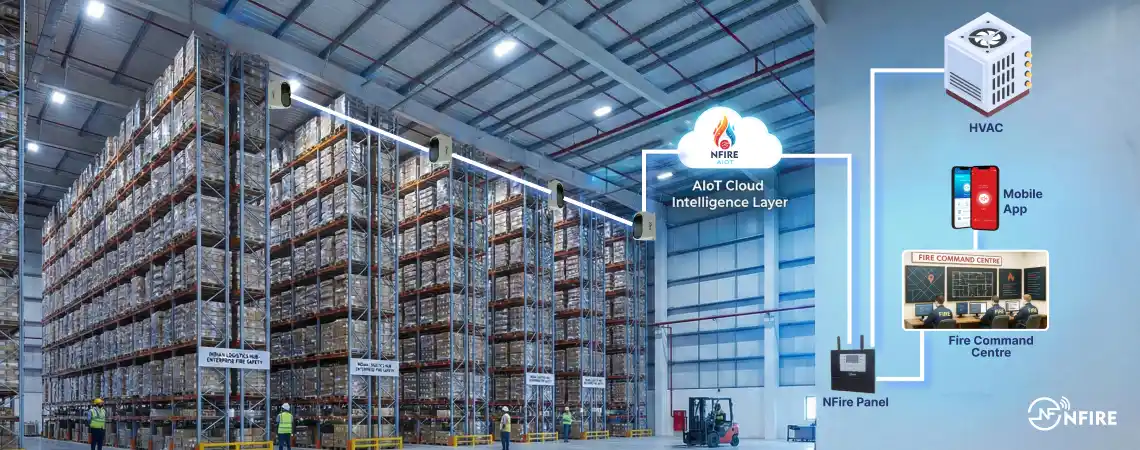
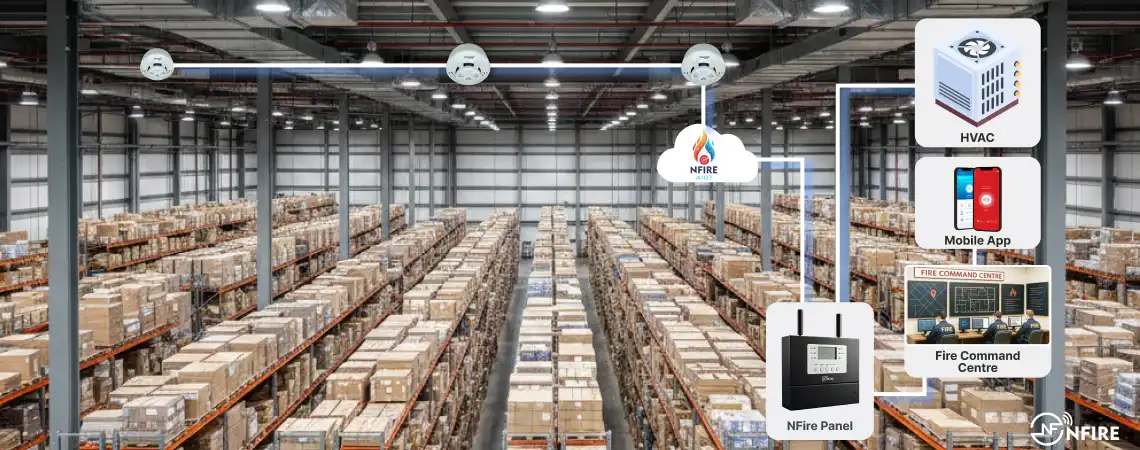
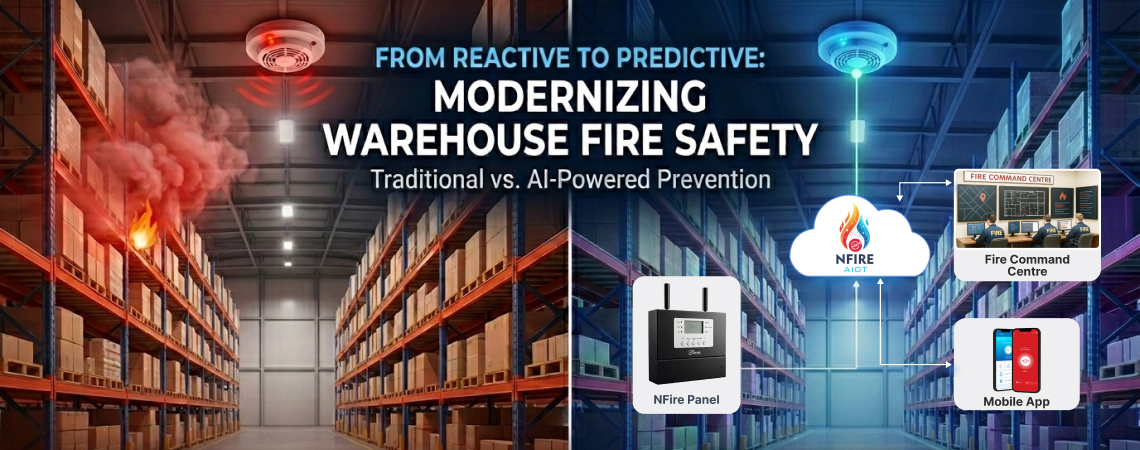
To overcome these challenges, modern logistics leaders are adopting AI-powered warehouse fire safety systems like the NFire AIoT Intelligence Platform.
These systems move from reactive detection → predictive prevention.
Each sensor is assigned a unique digital ID, enabling:
AI continuously monitors:
It detects pre-fire conditions hours before ignition, allowing preventive action.
Machine learning understands warehouse patterns and filters:
Result:
AIoT systems integrate with:
In case of threat, it can automatically:
| Feature | Traditional System | AIoT System |
|---|---|---|
| Detection Time | Late | Early (Predictive) |
| Accuracy | Low | High |
| False Alarms | Frequent | Reduced by 90% |
| Location Tracking | Zone-based | Aisle-level precision |
| Automation | No | Yes |
Warehouse fires are no longer rare events—they are high-impact business risks.
If your logistics operation runs on:
Then relying on outdated fire detection systems is a serious vulnerability.
The future of warehouse safety lies in predictive, AI-driven fire prevention systems.
Stop relying on outdated fire detection that reacts too late.
Book a free warehouse fire risk assessment today and discover how AI-powered fire safety can:
AI-based fire detection systems are considered the most effective as they predict and prevent fires before ignition.
They rely on delayed smoke detection, lack precise location tracking, and generate frequent false alarms.
It uses sensors and machine learning to analyze environmental data and detect early fire risks like heat patterns and gas changes.
E-commerce, logistics, FMCG, pharmaceuticals, and manufacturing industries benefit the most.